
As Walmart Marketplace has grown, sellers have two main paths for getting orders to customers: Walmart Fulfillment Services (WFS), where Walmart stores and ships your inventory, or seller-fulfilled, where you or your 3PL handles the entire process. Each has real tradeoffs — here's how to think through which fits your business.
What Is Walmart Fulfillment Services (WFS)?
WFS works similarly to Amazon FBA. You send inventory to Walmart's fulfillment centers, prepped and labeled to their specifications, and Walmart handles storage, picking, packing, and shipping when an order comes in. Items fulfilled through WFS are often eligible for two-day shipping badges, which can improve visibility and conversion on the Walmart Marketplace.
What Is Seller-Fulfilled on Walmart Marketplace?
With seller-fulfilled orders, your inventory stays at your own warehouse or with your 3PL. When a Walmart order comes in, your team — or your fulfillment partner — picks, packs, and ships it directly to the customer. Walmart sets shipping speed standards that seller-fulfilled orders need to meet to maintain good standing.
Comparing the Two Models
The core tradeoff is control versus convenience. WFS removes the operational work of fulfillment from your plate, but it means your inventory is split off into Walmart's network specifically — separate from whatever you're using for Amazon, Shopify, or other channels. Seller-fulfilled keeps everything in one place, but the responsibility for meeting Walmart's shipping speed requirements falls on you and your 3PL.
Cost structures also differ. WFS pricing is set by Walmart and includes storage and fulfillment fees similar to Amazon FBA's fee structure. Seller-fulfilled costs depend on your 3PL's rates for storage, pick-and-pack, and shipping — which, for sellers already using a 3PL for other channels, may mean little to no additional storage cost since the same inventory pool serves multiple platforms.
When WFS Makes Sense
WFS can be a good fit if Walmart is your primary or sole sales channel, if you want the two-day shipping badge without managing fulfillment speed yourself, or if you're not currently set up with a 3PL and don't want to build that operationally yet.
When Seller-Fulfilled With a 3PL Makes Sense
Seller-fulfilled through a 3PL tends to make more sense if you sell across multiple platforms and want one inventory pool rather than splitting stock between Amazon FBA, WFS, and your own warehouse. It also makes sense if branded packaging and custom inserts matter to your business — WFS shipments go out in Walmart's standard packaging, while a 3PL can pack to your specifications. And if you already have a 3PL relationship for Amazon FBA prep or Shopify fulfillment, adding Walmart as a seller-fulfilled channel through the same partner avoids duplicating your operation.
Compliance Either Way: GS1 Barcodes
Regardless of which model you choose, Walmart Marketplace requires GS1-compliant barcodes on most products. If you're prepping inventory for WFS, this needs to happen before it ships to Walmart's fulfillment centers. If you're seller-fulfilled, your 3PL should verify barcode compliance as part of receiving and storage. See our Walmart Marketplace fulfillment page for more on what this involves.
How ElitePrepWare Supports Walmart Sellers
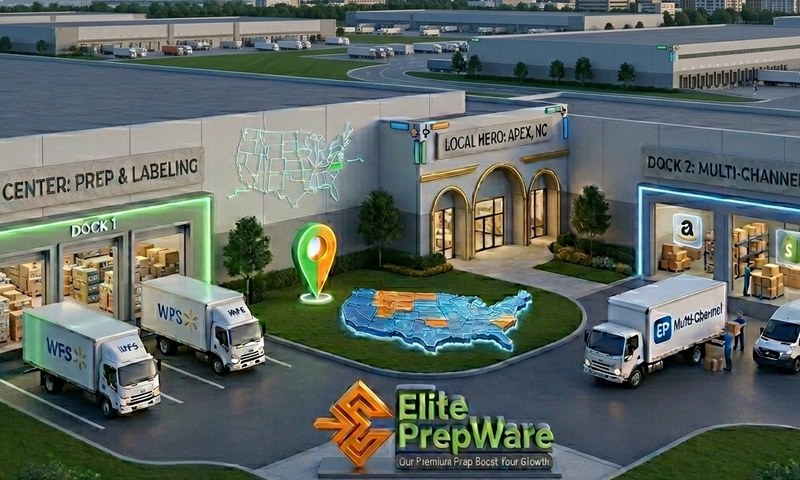
At our Apex, NC facility, we support both paths — prepping and labeling inventory for WFS to Walmart's specifications, and fulfilling seller-fulfilled Walmart orders with same-day processing to help meet Walmart's shipping speed requirements. For sellers already using us for Amazon FBA prep or Shopify fulfillment, adding Walmart as seller-fulfilled means no new inventory pool to manage — everything ships from the same warehouse.
Not sure which model fits your business? Contact us to talk through your Walmart Marketplace setup, or explore our transparent pricing for seller-fulfilled fulfillment.