
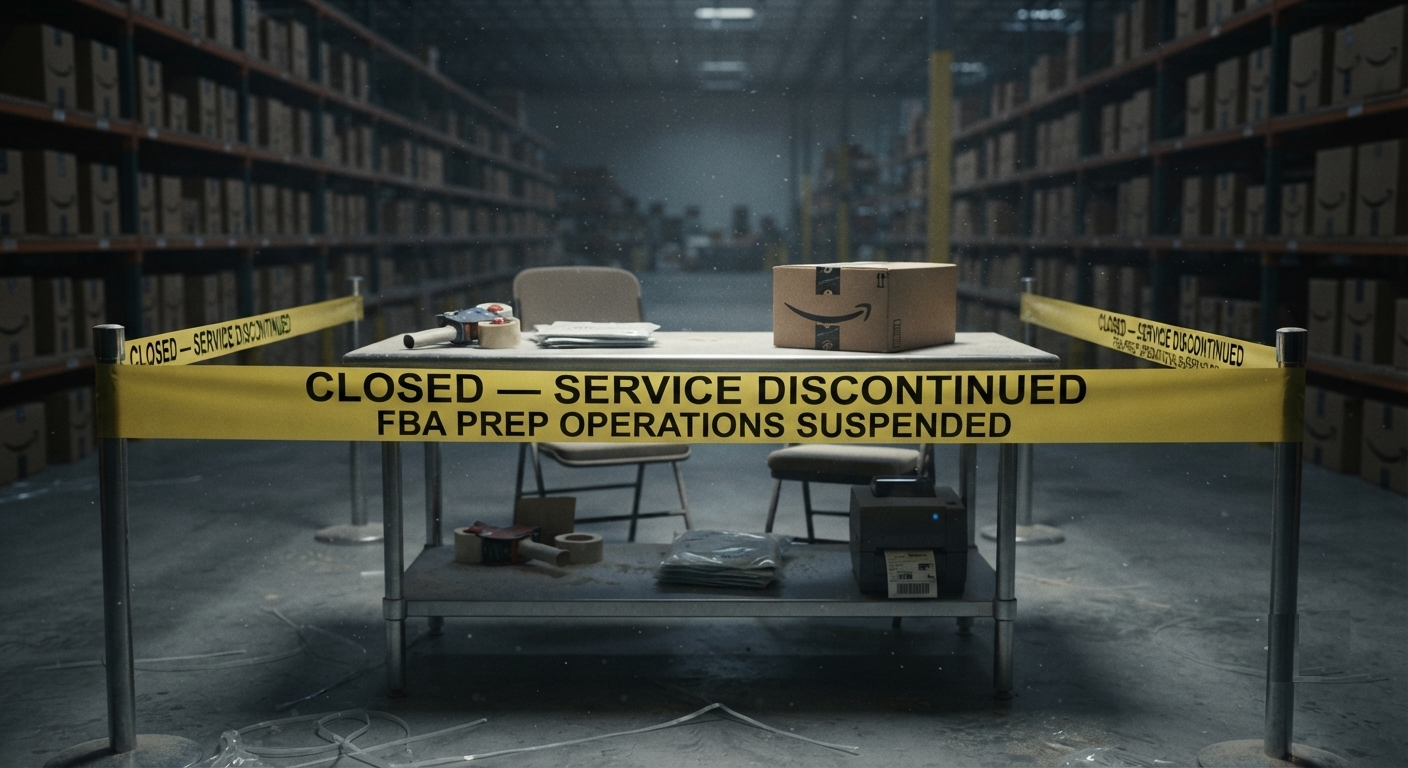
On January 1, 2026, Amazon permanently discontinued all in-house prep and labeling services for FBA shipments in the United States. No more polybagging. No more FNSKU labeling at the fulfillment center. No more bubble-wrapping on your behalf. Every product you send to Amazon must now arrive fully prepped and compliant before it leaves your hands — or face rejection, delays, and expensive penalty fees.
For sellers in North Carolina who relied on Amazon's prep services as a backup or primary solution, this change requires immediate action. Here's what happened, what it means for your operation, and what your options are.
What Amazon Changed — and Why
Amazon announced the change on July 28, 2025, citing improvements in seller packaging capabilities and a desire to streamline fulfillment center operations. The majority of sellers were already handling their own prep, either in-house or through third-party providers. Amazon effectively decided the remaining minority no longer justified maintaining a prep infrastructure.
What this means in practice: any FBA shipment created on or after January 1, 2026 must arrive at an Amazon fulfillment center fully compliant. This includes FNSKU labeling, polybagging for required items, bubble wrapping for fragile products, box prep and packing, bundling and kitting for multi-item sets, and suffocation warning labels where required. There are no exceptions and no grace period for new shipments.
The New Penalty Landscape
At the same time Amazon exited the prep business, it restructured its inbound defect fees dramatically. Previously, prep mistakes cost sellers $0.02–$0.07 per unit. In 2026, those fees jumped to $0.32–$1.74 per unit for standard items and up to $8.25 per unit for oversize products — an increase of up to 1,600% for some defect categories.
The math is now unforgiving. A shipment of 500 mislabeled units can trigger a $300+ defect penalty before you factor in delayed check-in, stranded inventory, or the account health impact that follows. A professional prep center with 99%+ accuracy is no longer just a convenience — it's margin protection.
Your Three Options
Option 1 — Build Your Own In-House Prep
You handle all prep yourself before shipments leave your location. This gives you full control but requires investment in label printers, polybagging equipment, trained staff, adequate space, and ongoing familiarity with Amazon's prep requirements — which change more often than most sellers realize. For sellers with consistent, high-volume operations and existing warehouse space, this can work. For most small to mid-size sellers, the labor and error risk makes it expensive at scale.
Option 2 — Use Amazon's Service Provider Network (SPN)
Amazon now maintains a directory of vetted third-party prep providers. These are checked for compliance capability and capacity. This is essentially Amazon pointing you toward the same 3PL ecosystem that existed before — just making it more formal now that they've exited the prep business themselves.
Option 3 — Partner with a Local NC Prep Center
For sellers in North Carolina, a local prep center like ElitePrepWare in Apex, NC offers significant advantages over both DIY and distant national providers. You get the compliance expertise of a dedicated prep operation without the overhead of running one yourself, plus the logistical advantage of proximity to your supplier receiving point.
Why North Carolina Sellers Have a Specific Advantage
Our Apex, NC facility sits in the Raleigh-Durham Research Triangle, minutes from major interstate connections. For sellers importing inventory or receiving from domestic suppliers in the Southeast, a local prep center means faster receiving, lower inbound freight costs, and quicker turnaround to Amazon fulfillment centers compared to shipping inventory to a distant prep operation.
We prep to Amazon's current specifications across all product categories — FNSKU labeling, polybagging, bubble wrapping, bundling, and box prep — with same-day processing so your inventory gets into Amazon's network as fast as possible after prep is complete. See our full FBA Prep & Kitting service for what's included.
What to Do Right Now
If you're still handling prep yourself or scrambling to find a solution after Amazon's January 2026 exit, here are the immediate steps:
- Audit every SKU in your catalog for prep requirements — what needs polybagging, what needs bubble wrap, what has suffocation warning requirements
- Get a prep partner confirmed before your next inbound shipment — don't wait until you have inventory en route
- Run a test shipment through your new prep process before relying on it at volume
- Review your storage strategy — Amazon's Q4 storage fee surcharges make pre-positioning inventory at a 3PL increasingly attractive
The sellers who moved early on this transition have smoother operations and lower per-unit costs than those who scrambled after the deadline. If you're still figuring it out, now is the time. Contact ElitePrepWare for a custom prep quote, or review our transparent pricing to plan your budget.